Q&A with the Interior Design Team: Your Most Common Interior Design Questions, Answered

By Alex Epstein, Director of Interior Design
Every home tells a different story, which is why there is never a one-size-fits-all approach to interior design. From selecting the right finishes to choosing fabrics, wallpaper, lighting, and furnishings, the sheer number of available products can feel overwhelming.
Our interior designers spend every day helping clients make thoughtful decisions that reflect both their personal style and the way they live. To make the process a little easier, we asked our Instagram community to submit their biggest interior design questions.
Here are some of our favorites—and our answers.
Q: Is wallpaper out of style? It seems like a big commitment.
Absolutely not.
Wallpaper continues to be one of our favorite ways to introduce personality, texture, and visual interest into a home. Today’s wallcoverings extend far beyond traditional floral prints and busy patterns. We are specifying everything from sophisticated linens and grasscloths to subtle textures, bold patterns, murals, and even embossed leathers.
Wallpaper is particularly effective in homes with taller ceilings, where expansive wall surfaces benefit from added depth and dimension. It creates warmth while adding another layer to the overall interior design.
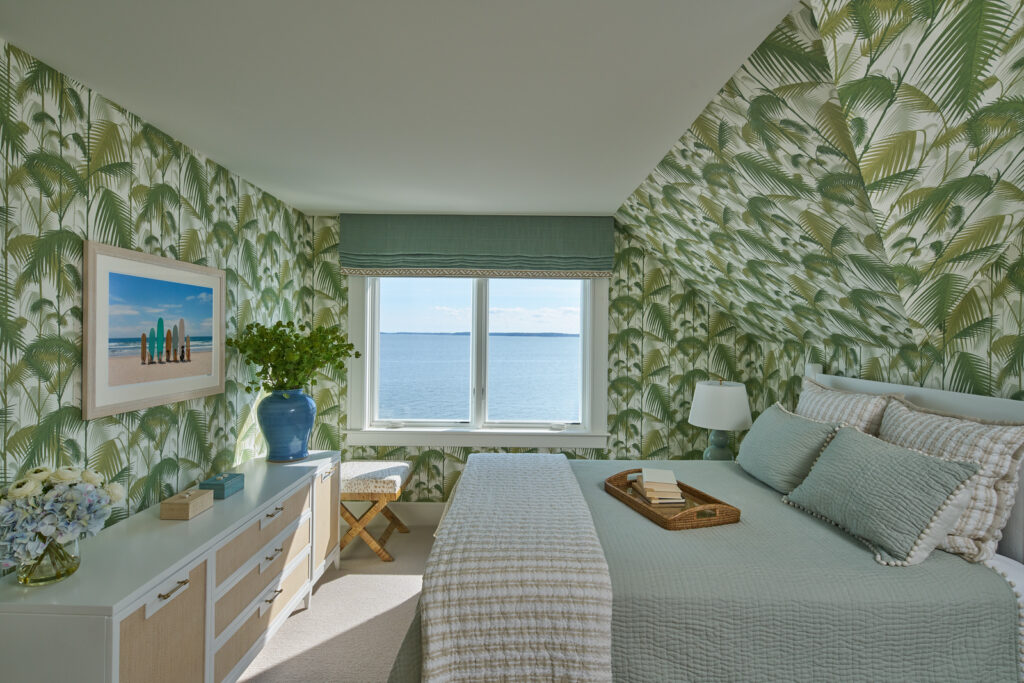
Don’t be afraid to think beyond four walls. We love incorporating wallpaper inside built-in bookcases, behind open shelving, on ceilings, or within niches to create unexpected moments throughout a home.
Still nervous about committing?
Start with a powder room.
These smaller spaces are perfect for experimenting with color, texture, or pattern without overwhelming the home. One of our recent projects featured a beautifully understated Zoffany wallcovering that delivered exactly the amount of visual impact our client wanted while remaining timeless and neutral.
Q: What paint colors do you recommend for exterior stucco?
The best exterior paint color is rarely selected in isolation.
When designing a home’s exterior, we always begin by looking at the architecture as a whole. Stucco should work harmoniously with roofing materials, stone, brick, siding, windows, trim, and the surrounding landscape to create a cohesive exterior color palette.
If your home incorporates natural stone or stone veneer, those materials often become the foundation for selecting paint colors that feel authentic and timeless.
Many of our favorite exterior paint colors come from Benjamin Moore’s OC Collection, which has become a trusted resource for soft whites and sophisticated neutral tones.
Two colors we frequently return to are Benjamin Moore Simply White and Benjamin Moore White Dove, both of which complement a wide range of architectural styles.
And one final piece of advice…
Always sample your paint.
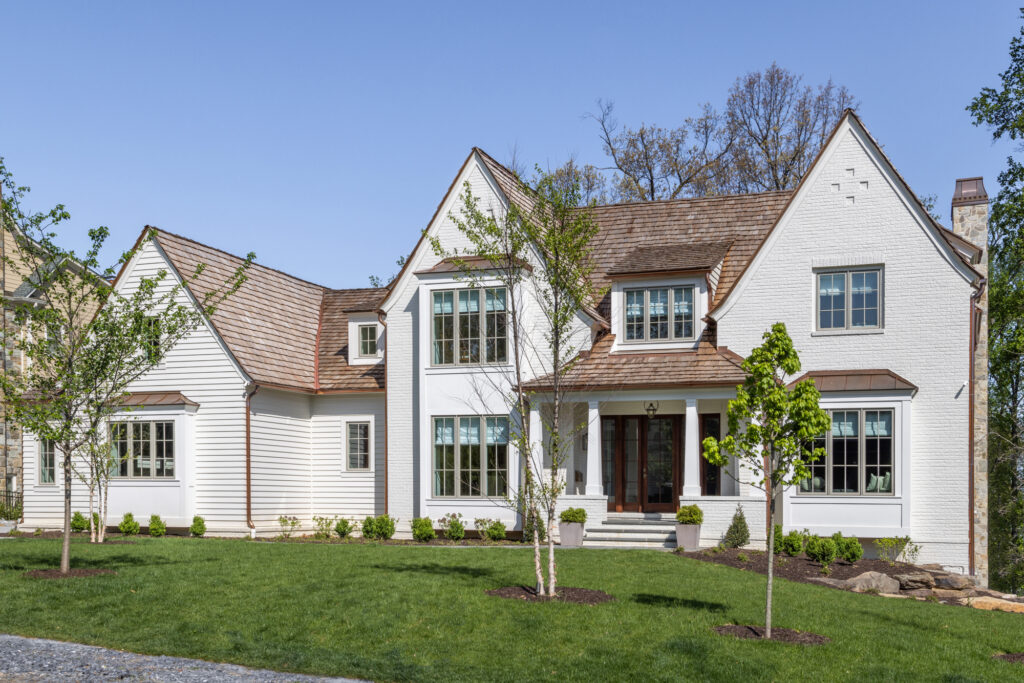
Large exterior surfaces reflect light differently than small paint chips. Colors almost always appear brighter and more expansive once applied to the home, making sample boards one of the most valuable steps in the exterior design process.
Q: Do all of the metal finishes in a kitchen or bathroom need to match?
The short answer?
Yes…and no.
Rather than thinking about individual fixtures, we approach every room as one complete composition.
Kitchen and bathroom design includes dozens of metal finishes—from plumbing fixtures and decorative lighting to cabinet hardware, door hardware, mirrors, and accessories. The goal isn’t necessarily for every finish to match perfectly, but for them to feel intentionally coordinated.
Some of our favorite finishes include polished nickel, polished chrome, unlacquered or antique brass, and oil-rubbed bronze.
Today’s brass finishes are dramatically different from those many homeowners remember from years ago. Softer antique brass and warm unlacquered brass have become timeless choices that pair beautifully with cooler metals like polished nickel or chrome.
Mixing metal finishes successfully is all about balance. Combining warm and cool finishes thoughtfully creates depth and character without feeling random.
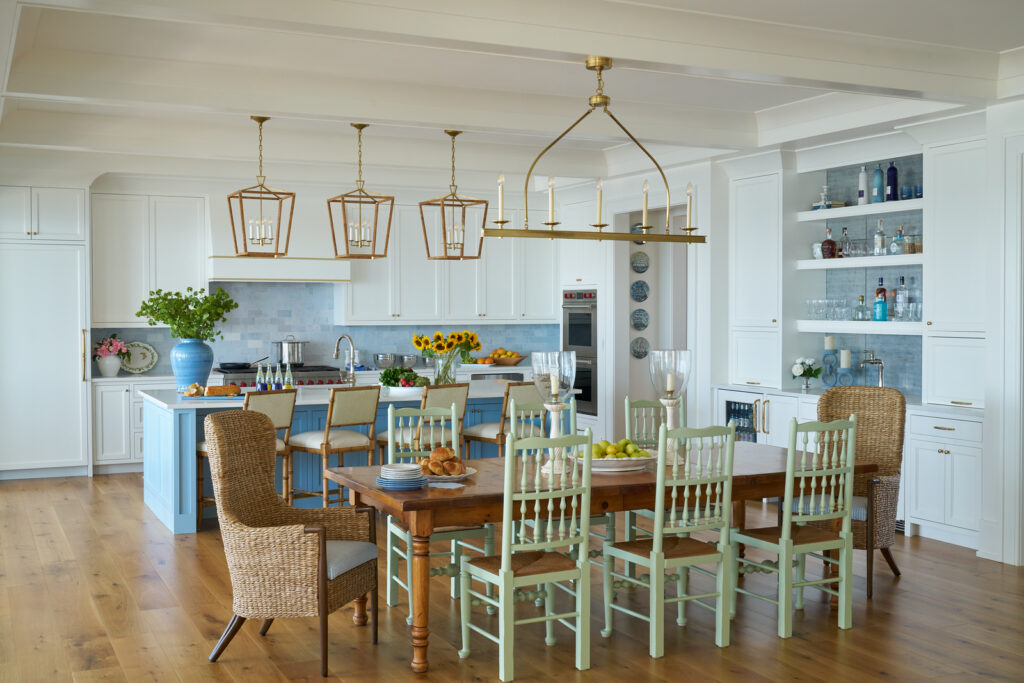
That said, if you prefer every finish to match, that’s perfectly beautiful too. Great interior design is ultimately about creating a home that reflects your personal style.
Q: I found a fabric I love, but how do I know if it’s durable enough for upholstery?
Beauty should always be balanced with performance.
When selecting upholstery fabrics, we consider fiber content, fabric weight, durability, and how the furniture will actually be used.
Lightweight decorative fabrics often aren’t appropriate for upholstery because they may shift over cushions or pill over time. Depending on the application, we may recommend adding knit backing to strengthen the fabric and improve long-term performance.
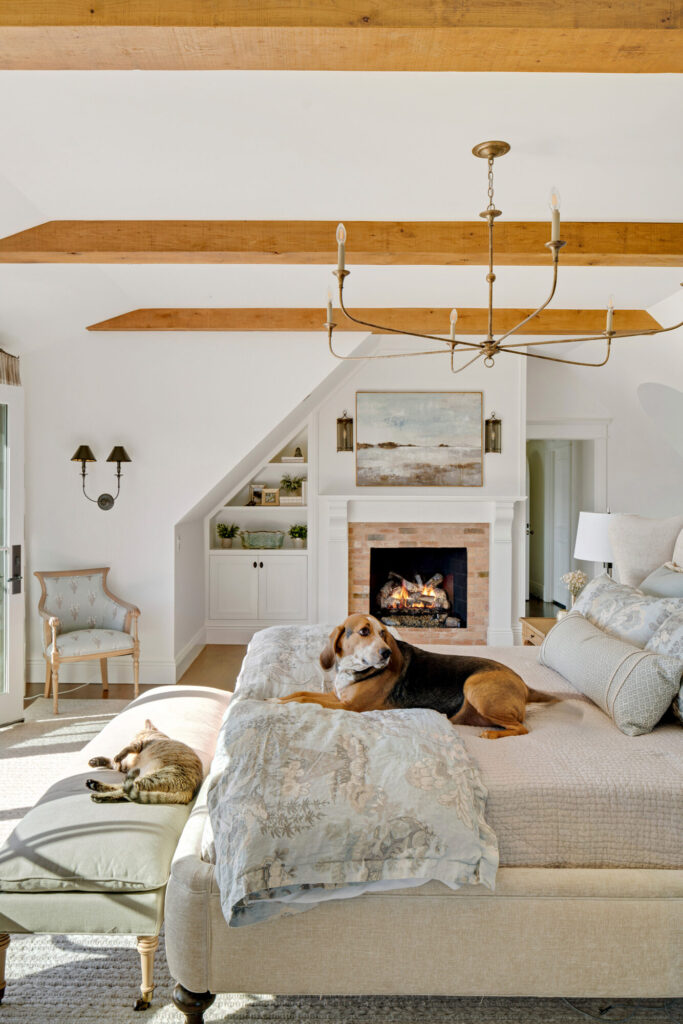
Many of our clients prioritize durability—and understandably so.
Homes today are filled with children, pets, entertaining, and everyday life. The goal isn’t to create rooms that feel too precious to enjoy.
Performance fabrics have transformed residential interior design over the past several years. Brands offering technologies like Crypton® and Nanotex® provide stain-resistant fabrics that maintain their beauty while standing up to daily living.
Manufacturers including Thibaut, Kravet, and many others now offer beautiful performance collections that combine luxury with practicality.
Q: Should artwork match the room?
Not exactly.
Rather than selecting artwork simply because it matches a sofa or paint color, we encourage clients to choose pieces that have personal meaning and create an emotional connection.
Artwork should feel authentic to the people living in the home.
One simple way to create cohesion is to repeat one of the room’s accent colors—a rich teal, warm coral, soft green, or muted blue—within the artwork itself.
This subtle relationship allows the artwork to feel connected to the overall interior without becoming overly coordinated.
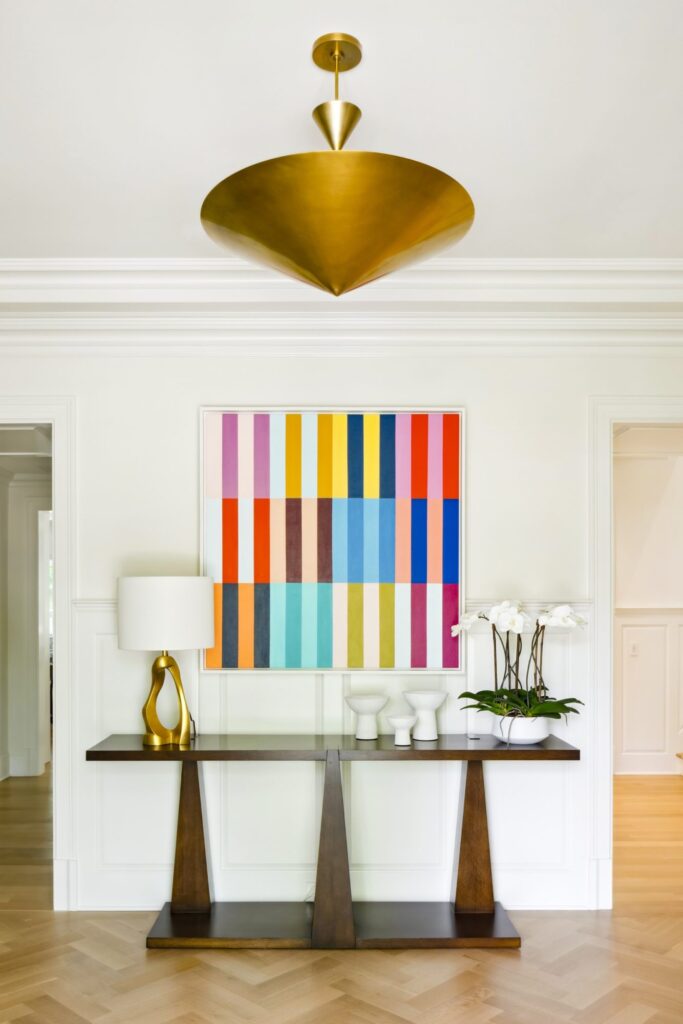
Some of the most memorable homes feature artwork that tells a story rather than simply filling a wall.
Q: Is subway tile still in style?
Absolutely.
Subway tile has been around for more than a century, making it one of the most enduring materials in residential interior design.
If you look back at Parisian apartments from the early 1900s, you’ll find subway tile used throughout kitchens and bathrooms. Its clean proportions and timeless simplicity continue to make it an excellent choice for backsplashes, showers, and accent walls.
The beauty of subway tile is its versatility.
Changing the size, color, finish, texture, grout color, or installation pattern can completely transform its appearance while preserving its timeless appeal.
One of our favorite resources is Winchester Tile Company, available through Chesapeake Tile in Baltimore, whose handcrafted collections offer beautiful variations on this enduring classic.
Q: What rug do you recommend for a family room?
Family rooms truly are the heart of the home.
They’re where families gather to watch movies, entertain friends, play games, work remotely, and simply spend time together.
Because these rooms receive so much daily use, durability is just as important as aesthetics.
For natural fibers, wool remains one of our favorite choices. It offers exceptional durability, natural stain resistance, warmth underfoot, and long-lasting beauty.
For families seeking even greater performance, polypropylene rugs have become an outstanding option. Originally developed for outdoor living spaces, today’s indoor-outdoor rugs are remarkably soft while offering incredible durability.
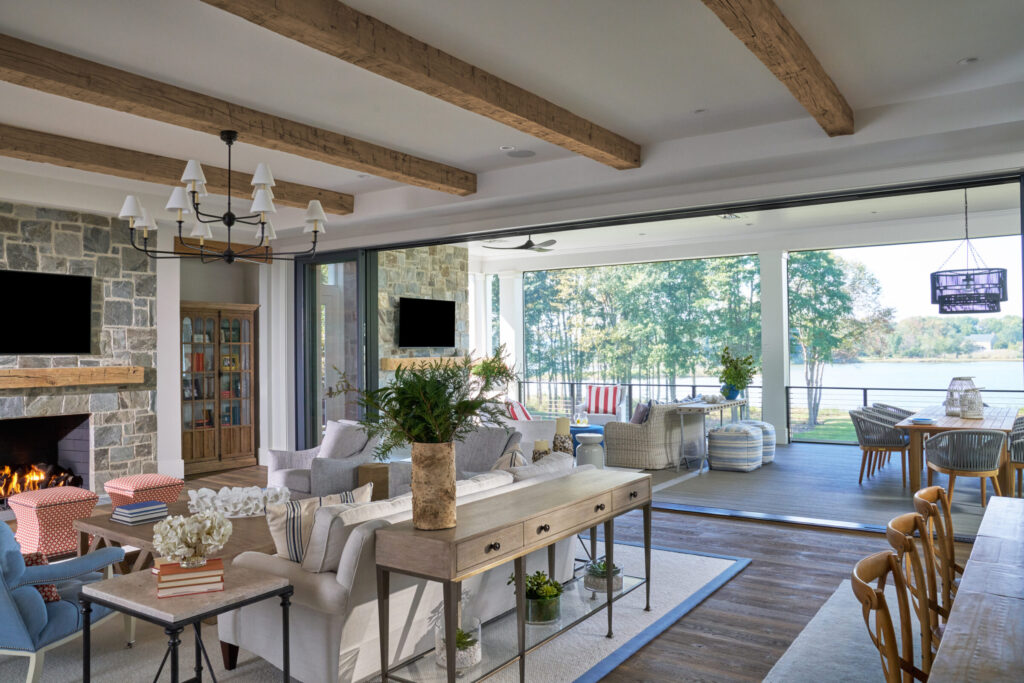
Perennials, long recognized for their luxury performance fabrics, has also developed an exceptional rug collection. Their polypropylene rugs can be customized in a wide variety of colors and patterns and are durable enough to be cleaned with a garden hose—making them ideal for busy households with children, pets, and frequent entertaining.
Designing Homes That Reflect the People Who Live There
At Purple Cherry Architecture & Interiors, every design decision begins with one question:
How do our clients want to live?
Whether we’re selecting wallpaper, mixing metal finishes, designing a custom kitchen, or choosing the perfect rug, our goal is always the same—to create homes that are beautiful, functional, timeless, and thoughtfully tailored to each family’s lifestyle.
We hope these answers help simplify your own design decisions, and we’d like to thank our Instagram community for inspiring this conversation. Some of our favorite discussions begin with the simplest questions.